
Quick answer: what should an EPC buyer check?
Confirm the network voltage, equipment rated voltage, continuous current, short-circuit duties and installation conditions. Then provide a single-line diagram, feeder lineup, protection requirements and required technical documents. Separate confirmed values from assumptions: a supplier cannot resolve an incomplete fault study or protection philosophy from a cabinet photograph.
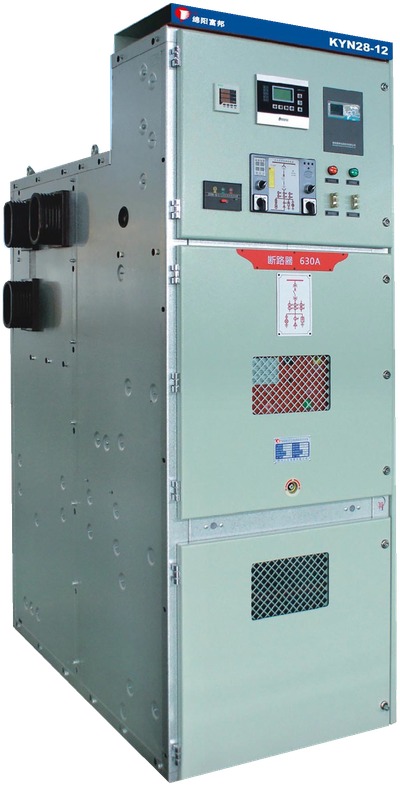
For a Malaysian project, also identify the owner's specification, consultant's requirements and applicable utility or local approval process. A 12 kV KYN28 proposal is a configuration to review, not automatic evidence of suitability for every 11 kV installation.
Understand the switchgear application
Start with the single-line diagram and a panel schedule. An incoming feeder connects a source; an outgoing feeder supplies a downstream circuit. A transformer feeder must coordinate with the transformer and its protection. A bus coupler links bus sections under the intended operating scheme. Metering panels accommodate the specified measurement arrangement. These functions determine switching devices, instrument transformers, interlocks and secondary wiring.
Primary distribution and secondary distribution describe different network duties, not interchangeable cabinet labels. Confirm the position in the network, operating philosophy, required continuity and available space before comparing equipment families.
Metal-clad switchgear is a form of metal-enclosed equipment with particular construction and compartment arrangements. Other metal-enclosed designs can use different access, partitioning or switching arrangements. A ring main unit serves its specified distribution functions and operating conditions. Do not treat an RMU, a withdrawable metal-clad lineup and another metal-enclosed design as direct substitutes just because their voltage ratings look similar. Ask how the proposed construction meets the specification.
Select the correct voltage class
State the nominal network voltage separately from the equipment rated voltage and specified insulation levels. Also confirm frequency, the earthing arrangement, temporary overvoltage considerations and environmental conditions. The project engineer should establish the insulation requirements and any site corrections; the supplier should confirm the proposed equipment against them.
An 11 kV network and 12 kV equipment class are a common selection scenario to review, not an automatic compatibility rule. Check the project's maximum system voltage, insulation coordination and utility requirements. FUBANG's KYN28-12 page describes 12 kV class equipment; that designation does not establish suitability for 24 kV, 36 kV or 40.5 kV duties. Do not extend a model's stated voltage range by assumption.
Electrical rating checklist
Use one agreed basis for all bidders. Mark unresolved requirements for engineering review rather than filling gaps with a supplier's standard catalogue value.
| Requirement | What to confirm | Why it matters | Buyer source |
|---|---|---|---|
| Rated voltage | Equipment class and maximum system voltage | Establishes the voltage duty | Network data; consultant specification |
| Rated current | Required continuous rating for each circuit | Limits normal thermal duty | Load schedule; design calculations |
| Busbar current | Bus section rating and operating arrangement | Must support the intended load paths | Single-line diagram; load-flow study |
| Feeder current | Each feeder's duty, including applicable overload assumptions | Different feeders need different selections | Feeder schedule; load data |
| Short-circuit breaking current | Circuit-breaker interrupting rating at the applicable voltage | Breaker must interrupt the specified fault | Fault study; breaker data |
| Short-time withstand current | Assembly and main-circuit withstand rating | Addresses the current carried before fault clearance | Fault study; assembly documentation |
| Fault duration | Required withstand time and protection clearing basis | Current and duration must be assessed together | Protection coordination study |
| Insulation requirements | Specified withstand levels and site corrections | Prevents selection by voltage name alone | Insulation coordination; specification |
| Protection relay | Functions, logic, settings responsibility and interfaces | Defines selective fault clearance | Protection philosophy; interface schedule |
| CT / VT | Ratios, accuracy, burden and protection duties | Affects measurement and protection performance | Metering requirements; protection design |
| Auxiliary control supply | Voltage, source, autonomy and circuit duties | Supports tripping, closing and controls | Station auxiliary and DC design |
| Ambient conditions | Temperature, humidity, contamination and indoor environment | May affect ratings and enclosure requirements | Site survey; environmental specification |
| Installation altitude | Actual site elevation and required assessment | May affect insulation and thermal performance | Site data; project specification |
Scroll the table to compare all columns on a smaller screen.
Circuit-breaker breaking current and switchgear short-time withstand current are different requirements. Matching a kA number without checking its function, duration and documented scope is not an adequate comparison. Record any required peak withstand duty as well, and have the responsible engineer reconcile the proposed ratings with the study.
Safety, interlocks and maintenance
Specify which compartments may be accessed, under what electrical conditions, and what must remain in service. Ask the supplier to explain breaker position, earthing-switch operation, door access and the complete interlocking sequence. An interlock description should be checked against the proposed arrangement and operating procedure, not treated as permission to bypass safe isolation.
IEC 62271-200 addresses AC metal-enclosed switchgear above 1 kV and up to and including 52 kV. Its service-continuity and internal-arc concepts help structure procurement questions. Loss of service continuity concerns which other compartments or functional units may remain energised during defined compartment access; it is not permission to work live. Specify the required category, partition class and, where required, internal arc classification and its accessibility, tested sides, current, duration and installation arrangement. These are separate characteristics; one does not prove the others.
Check the applicable edition and amendment information, plus the project's adoption requirements. Request evidence for the offered assembly and relevant arrangement. Citing IEC does not establish that every FUBANG configuration has all classifications or complete test coverage. Do not assume an unverified internal-arc rating. Review maintenance clearances, cable access, handling space and the intended operating instructions before accepting the layout.
Compare EPC supplier quotations on the same scope
A single-panel price can conceal differences in the lineup, protection and interfaces. Issue the same scope schedule to every bidder, then record inclusions, exclusions and deviations against each line.
| Scope item | Compare before accepting a quotation |
|---|---|
| Number of panels | Panel quantities, functions and lineup arrangement |
| Circuit breakers | Proposed device, ratings, operating mechanism and accessories |
| Relay and metering scope | Functions, instrument transformers, meters and settings responsibility |
| Wiring and interfaces | Terminal schedules, communication and external connection boundaries |
| Auxiliary power | Required AC/DC supplies and what the supplier provides |
| Cable termination | Cable count, size, entry direction and termination responsibility |
| Drawings | Single-line, general arrangement, schematics and approval stages |
| Technical documentation | Data sheets, manuals and applicable evidence for the offered scope |
| Inspection and testing | Agreed tests, witness points, procedures and acceptance records |
| Packing and shipping | Packing method, delivery boundary and handling requirements |
| Spare parts | Commissioning and operational spares, clearly itemised |
| Warranty and service | Written coverage, exclusions and agreed support arrangements |
Scroll the table to compare all columns on a smaller screen.
Keep the panel-function schedule beside this comparison so that an omitted metering or coupler panel cannot disappear inside a total price. FUBANG has no verified public uniform switchgear price; request a proposal for the reviewed configuration and supply boundary.
Malaysia project requirements
Confirm the owner and consultant's specification before assuming a standard supplier package is acceptable. For a TNB-connected site in Peninsular Malaysia, establish the applicable supply arrangement, submission process and equipment requirements using TNB's Electricity Supply Application Handbook and connection guidance. Confirm the responsible authority and utility for the actual site; TNB's process is not automatically applicable throughout Malaysia. A private industrial installation and utility-interface equipment need not have the same acceptance route.
Identify which installation, competent-person and equipment approval requirements apply using the relevant authority's guidance, including Suruhanjaya Tenaga's installation information where applicable. Allocate responsibility for local submissions, installation, inspection and commissioning in the contract. A manufacturer supplying equipment and a contractor carrying out regulated installation work have different roles; do not infer that every distributor needs the same engineering licence.
Ask who submits drawings, who resolves consultant comments and which approvals are needed before manufacture or energisation. This guide does not assert that FUBANG is a TNB-approved supplier or holds Malaysian project approvals. Any required acceptance must be checked for the actual equipment and project.
Sample MV switchgear RFQ
Use this checklist to open a technical discussion. Send available information and identify what is still under review; do not invent fault levels or protection settings to complete the form.
| RFQ field | Information to provide |
|---|---|
| Project type | Substation, industrial plant or other application; owner requirements |
| Site location | Malaysia site address, indoor conditions and access constraints |
| Single-line diagram | Current revision and intended operating arrangement |
| Panel schedule | Incoming, outgoing, transformer, coupler and metering functions |
| Voltage class | Nominal network voltage, rated equipment voltage and insulation requirements |
| Rated current | Busbar and individual feeder continuous-current requirements |
| Fault level | Relevant fault study, breaking/withstand duties and duration |
| Protection requirements | Relay functions, CT/VT duties, logic and communication interfaces |
| Control supply | AC/DC voltage, source and operating duties |
| Installation conditions | Ambient conditions, altitude, cable entry and available dimensions |
| Required documentation | Drawings, manuals, applicable test evidence and submission stages |
| Quantity | Number of lineups and panels by function |
| Delivery programme | Required milestones and delivery boundary, subject to agreement |
Scroll the table to compare all columns on a smaller screen.
When to consider FUBANG KYN28-12
Consider FUBANG KYN28-12 withdrawable metal-clad switchgear when the project calls for a 12 kV class arrangement and the documented construction and configuration can meet the specified duty. Review its product information alongside the fault study, panel schedule and installation layout. The model name alone does not confirm a complete project solution.
Available configurations, technical documents and test evidence must be confirmed against the formal product material and proposed supply. Review the medium-voltage product category for equipment context and FUBANG's engineering and manufacturing capability for the documented company scope. Broader equipment enquiries can start from Products.
Final procurement checklist
Before requesting a firm quotation, assemble the single-line diagram and panel schedule; confirm voltage, current and fault duties; identify protection and auxiliary supplies; state site and cable interfaces; and list the required documents, tests and approval stages. Keep unresolved assumptions and supplier deviations visible until the responsible parties agree them.
Share these items for a technical configuration review. Start with the information available; supporting drawings can be exchanged through an agreed channel after contact. For more procurement references, return to Buyer Guides & Technical References.
Sources and scope
- IEC 62271-200:2021 — official scope; Amendment 1:2024. Standard scope and classification questions, not evidence of a FUBANG certification.
- TNB supply application guidance and connection guidance. Confirm requirements with the project consultant for the relevant connection.
- Suruhanjaya Tenaga: installation information. Confirm the authority and requirements applicable to the actual site.
- FUBANG KYN28-12 product information. Configuration and document scope require review.
This guide supports procurement preparation. Project design and acceptance require the responsible project parties to confirm the actual requirements.